
Bootleg ≠ dupe ≠ knockoff
by Lucca Zeray
·
BIG thank you to Veronica de Souza go follow her meticulously curated shopping substack. After chatting about this idea for over a year finally getting it out there.
The TLDR:
-
Dupe- Lookalike
-
Knockoff-Its trying to be real
-
Bootleg- cheap knockoff
-
Bootlegs / Dupe/ Knockoffs of dead designers OK
-
Bootlegs / Dupe/ Knockoffs of living designers BAD
-
Big company taking small companies idea- BAD
-
Ideas are fluid
-
If you’re going to be mad about getting knocked off, design around it.
-
Design is functional and iterative.
-
Money is always a consideration.
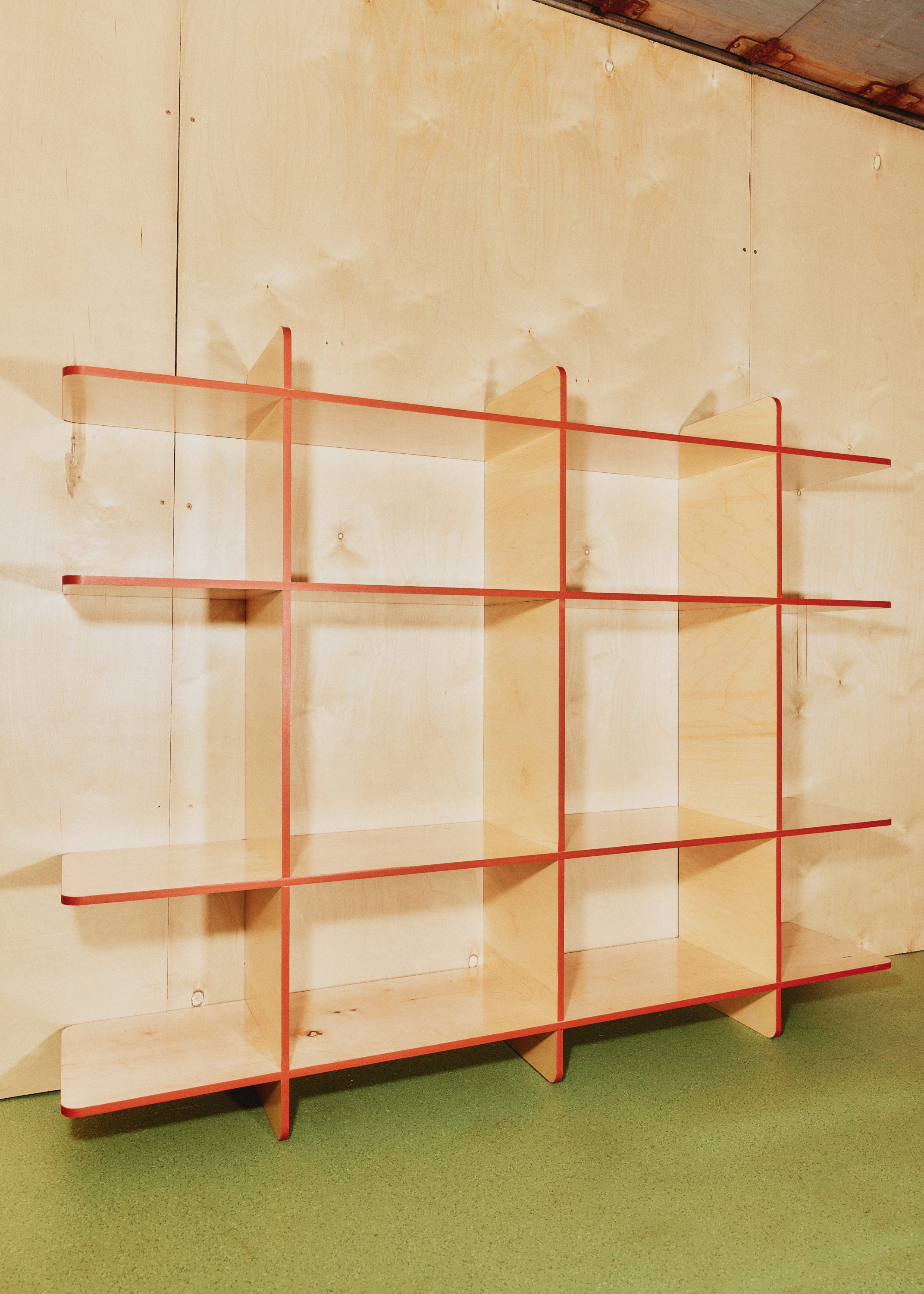
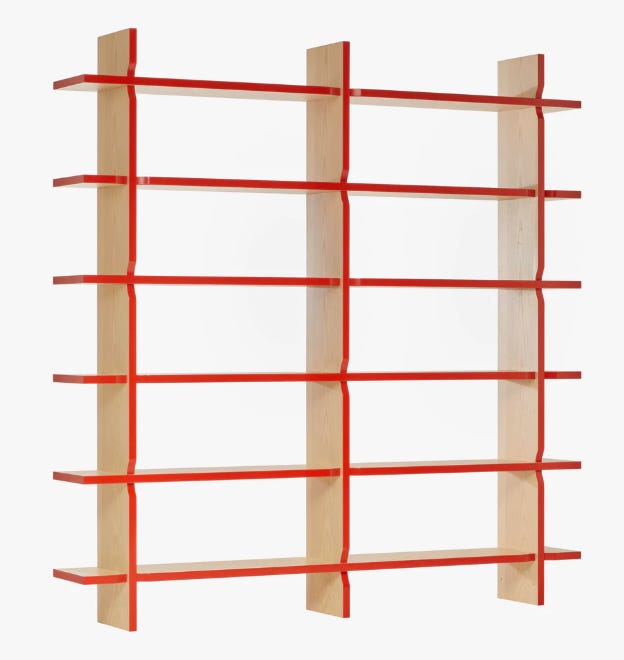
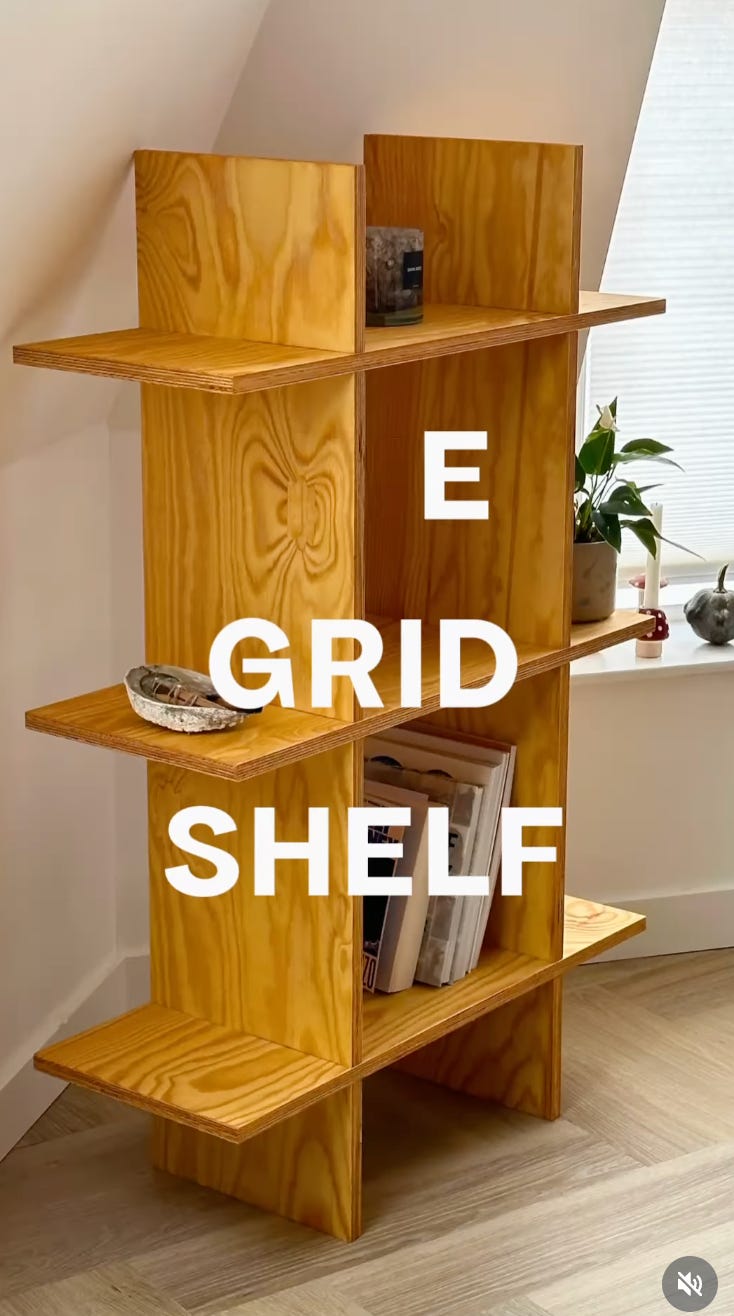
I got duped, I think? I manufacture and produce a line of modular flatpack shelving and another designer recently released suspiciously similar shelving units at the Salone De Mobile. For the record/ I love his work and don't think it was a direct knockoff, or malicious. A flatpack shelf can only look so many different ways, but it hits a bit too close to home and I have some serious thoughts about dupes
.
Ironically, in an attempt to beat out copycats before they could rip us off, we’d already been tossing around the idea to make our product drawings free since the start of the company. Starting a business is expensive and to have another company swoop in and make the same thing you spent hours or years on is so damning. We wanted to beat them to the punch but I guess the jokes on me.
Somehow, and for some reason, it’s taken as a fact that you will get bootlegged or duped. It’s not a matter of if, but when. Through the process of discovering and confronting my “copycats,” many people in my life told me it’s a “right of passage,” or that it means I have made it. My friend, who is on the industrial design team for a large tech company named after a lovely piece of fruit, told me: “It means you’re doing something right.” How depressing is that?!
!
Here’s the thing: I LOVE BOOTLEGS but I am not a fan of my means of living getting messed with.I have had a bunch of pairs of fake Jordans, I own a very fake Wassily chair that we restrapped with lawn chair strapping, a knockoff Barcelona chair and have produced my own Enzo Mari autoprogettazione shelving units, I relish in my bootleg wassilliy chair i own and love a good almost real piece of historical design. -BUT! There is a sharp contrast between ripping off a practicing designer, and bootlegging a chair designed by someone who has long left this planet. Its one think to make a classic but in a different factory or out of a cheeper material but no matter the cost its inherently emotional to have someone else put out work that looks very very very similar to your thing you have been working on for potentially years.
I used to work at a high end design gallery where we would regularly make $20,000 lamps. Who the hell is buying a $20,000 lamp? Who is designing a $20,000 lamp? Occasionally, these boutique designers would get knocked off and I rarely had pity (which was always a point of contention with my coworkers).
Like, yes, sure, it’s impressive that you conceived of this idea and then cut it all out of brass, polished it by hand meticulously and used local Brooklyn glassblowers and white-glove delivered it…but there’s always someone behind you, and they may be more willing to use cheap labor or plating over cheap metal. If the designer’s role is to think of the entire process from cradle to cradle, why not think about who’s looking at it? Whos making it and who can make it?
I think that design has always been (and will always be) an iterative process. It’s a variation on a theme: a chair can only look so different, a bookcase will most likely need to have a flat surface for books. When an idea is everyone steals but when it’s stolen and squeezed, and stretched and regurgitated, a new thing is made. When the same thing is just repackaged its just lazy.
If you’re going to be mad about getting knocked off, design around it. Designers’ jobs are to think about the full cycle and repercussions of what they are making. If you make something that’s easy to make, someone else will also make it. If you design something thats easy to make and and see knockoffs or dupes as the worst thing ever, you have to see it as another design challenge or constraint. Maybe its using a unique material, or developing a process that only your studio can produce.
Two fantastic yet different examples:
-
Emeco’s Navy chair is only produced in a single factory in Hanover, PA. They work with U.S. Customs, and if anything resembling a Navy chair enters the United States it is seized by US customs agents.
-
Gaetano Pesce developed his own unique way of casting epoxy rapidly so it can be formed and freehand. Because of this, the work produced from Pesce’s studio is incredibly recognizable. Typically the “bake it into the design” approach is reserved for collectable design which is mostly just functional art. But because he is able to work quickly and have studio assistants producing under his watchful eye, his items are “affordable” (affordable is in the eye of the beholder more on that later). My editor brought up a great point, about how incredibly recognizable his work is even though every single piece is so radically different. Ripping him off with a straight face would be inside joke with no punchline we all have been waiting for.
-
Chen and Kai Williams Transition mirrors, Their studio has a very unique way of functioning lots of serious play and experimentation. They have researched how to make mirrors from scratch, mixing chemicals and silvering plates of glass that have glued halves of rocks embedded in between. This is uniquely their process, if you bootleg one of their mirrors they would probably be amazed, it requires such a set of specialized tools and materials.
The practice of design is a broad subject, but I try to focus on the “progressive design” objects whose goal is to make domestic life easier, simpler, and more comfortable. There are so many examples of how design can be utilized to “make life better” but there are also equally as many examples how new radical progressive design can quickly become scooped up by the grips of capitalism. The Breuer chair, which was designed as a way to furnish middle class homes by using mass manufacturing methods like bent tubular steel, now sells for $800+. In my opinion, that’s not a very middle class price considering you’d need 3-6 chairs for a typical home. Enter the bootleg, selling for $250 to $800 for varying qualities of “dupe.” A person making $65k a year could probably swing that set of chairs. Was Breuer’s goal achieved? As long as you’re willing to give up the Knoll seal of authenticity you get a very similar chair for a very digestible price.
Classic design textbook pieces sold by Design Within Reach or Knoll get pushed through the copycat tube and shot out of a cannon of the internet though DTC brands, or Amazon storefronts. It feels pretty fruitless to try and fight it. How many genuine Togo sofas are out there? When I posted about my copycat dilemma on Instagram, a design editor of a very well read magazine pointed out that the people buying dupes will almost never be the people buying originals. They are simply different markets, they aren’t design buyers, they are people trying to furnish their homes. There’s a chance these people are design curious, though. And that dupe Togo sofa can open the door to becoming a regular at Beam BK or ComingSoon (or wherever you freaks shop).
Ps.
To walk the walk after yelling into the void of the internet, we have released our drawings at a 1:1 scale for purchase (the cost covers the printing and shipping), we do really believe in the greater goal of making affordable furniture so if you wanna take the sweat equity route and make them yourself we encourage it. But if you dont wanna order plywood, cut it, figure out the tolerances and own the tools etc, we are here for you.